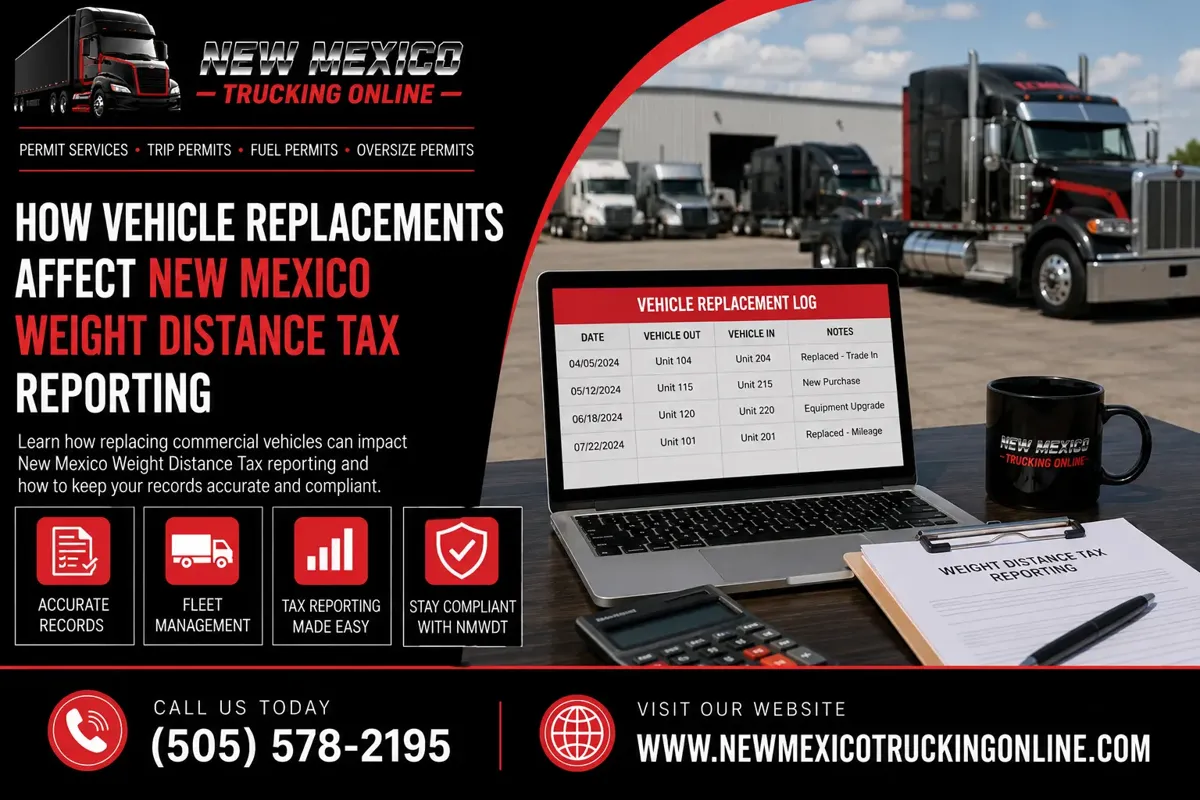
How Vehicle Replacements Affect New Mexico Weight Distance Tax Reporting
Table Of Contents
-
Introduction
-
Understanding New Mexico Weight Distance Tax Reporting
-
How Vehicle Replacements Affect New Mexico Weight Distance Tax Reporting
-
Best Practices When Replacing A Commercial Vehicle
-
Why Accurate Vehicle Information Matters
-
Why Many Trucking Companies Choose Our Service
-
FAQ
Introduction
Replacing a commercial vehicle is a routine part of fleet management. Whether a truck has reached the end of its service life, requires major repairs, or is being upgraded to improve efficiency, vehicle replacements help trucking companies maintain reliable operations and meet customer demands.
While replacing a truck may seem like a straightforward process, it can also affect administrative responsibilities, including New Mexico Weight Distance Tax (NMWDT) reporting. Because weight distance tax reporting relies on accurate vehicle information and mileage records, failing to update fleet records after replacing a vehicle can create reporting inconsistencies and unnecessary compliance concerns.
Many carriers focus on putting the replacement truck into service as quickly as possible, but overlooking reporting responsibilities can lead to avoidable complications during future filings or record reviews.
This guide explains how vehicle replacements may affect New Mexico Weight Distance Tax reporting, why maintaining accurate fleet information is important, and what trucking companies can do to keep their reporting organized throughout the transition.
Understanding New Mexico Weight Distance Tax Reporting
The New Mexico Weight Distance Tax program applies to qualifying commercial vehicles operating on New Mexico highways. Registered carriers are responsible for maintaining accurate mileage records and submitting required reports based on their operations within the state.
Accurate reporting depends on complete and up-to-date fleet information. Vehicle identification, registration details, mileage records, and operational data all contribute to preparing accurate Weight Distance Tax filings.
As fleets grow and equipment changes over time, maintaining organized records becomes increasingly important. New trucks enter service, older equipment is retired, and leased or replacement vehicles may temporarily become part of daily operations.
Because reporting is tied to vehicle activity, any changes to the fleet should be carefully documented. Keeping accurate records helps reduce administrative confusion while making future reporting more efficient.
How Vehicle Replacements Affect New Mexico Weight Distance Tax Reporting
Replacing a truck can affect several aspects of New Mexico Weight Distance Tax reporting.
When a vehicle is removed from service and another truck takes its place, fleet records should be updated to accurately reflect the current equipment being operated. Maintaining outdated vehicle information can create unnecessary confusion when preparing future Weight Distance Tax reports.
For example, a carrier may retire an older tractor after purchasing a newer model with improved fuel efficiency and safety features. Although the company's routes and customers remain the same, the replacement vehicle becomes the equipment responsible for future operations. Updating internal records helps ensure that mileage and operational information continue to be associated with the correct vehicle.
Vehicle replacements may also require dispatchers and fleet managers to review maintenance files, registration records, and reporting documentation before the new truck begins regular operations. Completing these administrative tasks early helps reduce the likelihood of reporting discrepancies later.
Companies should also communicate vehicle changes with employees responsible for mileage tracking and tax reporting. Ensuring everyone is working from the same fleet information helps maintain consistency throughout the reporting process.
Rather than waiting until the next filing deadline, updating vehicle records immediately after a replacement helps carriers stay organized and reduces the amount of administrative work required during reporting periods.
Best Practices When Replacing A Commercial Vehicle
Developing a consistent process for vehicle replacements helps simplify Weight Distance Tax reporting.
Fleet managers should begin by updating internal vehicle records as soon as the replacement truck enters service. Registration information, vehicle identification details, and fleet management records should all reflect the current equipment.
Dispatch personnel should also verify that routing systems, mileage tracking procedures, and operational records are using the correct vehicle information before assigning loads.
Companies that use electronic logging devices or GPS fleet management systems should confirm that replacement vehicles have been properly configured before beginning regular operations. Accurate electronic records help support future mileage reporting and improve recordkeeping consistency.
Maintaining documentation related to both retired and replacement vehicles is equally important. Organized files make it easier to answer questions during internal reviews and help carriers quickly locate historical records if needed.
Establishing standardized fleet replacement procedures helps reduce reporting errors while making future administrative tasks more efficient.
Why Accurate Vehicle Information Matters
Accurate vehicle information supports every stage of the New Mexico Weight Distance Tax reporting process.
When fleet records are current, dispatchers, accounting staff, and compliance personnel can prepare reports using reliable information. This reduces the likelihood of administrative mistakes and helps maintain consistent reporting throughout the year.
Accurate records also simplify internal audits, fleet management reviews, and routine compliance activities. Instead of searching through outdated vehicle information, companies with organized records can quickly verify which equipment was operating during a specific reporting period.
As trucking companies continue replacing equipment over time, maintaining consistent recordkeeping practices becomes increasingly valuable. Even routine fleet updates become much easier to manage when standardized procedures are already in place.
Good record management ultimately helps trucking companies spend less time correcting paperwork and more time focusing on efficient operations.
Why Many Trucking Companies Choose Our Service
New Mexico Trucking Online helps carriers manage New Mexico Weight Distance Tax requirements with fast, reliable, and professional assistance. Our experienced specialists help simplify the reporting process while providing guidance that supports accurate filings and ongoing compliance.
We provide fast processing, 24/7 customer support, weekend and holiday availability, secure online services, competitive pricing, and knowledgeable permit specialists committed to helping your business stay compliant. Whether you need assistance with New Mexico Weight Distance Tax, Trip Tax, Oversize Permits, or other trucking credentials, our team is here to help keep your operation moving.
Contact us today to get started.
FAQ
Does replacing a truck affect New Mexico Weight Distance Tax reporting?
Yes. Vehicle replacements should be reflected in your fleet records to help ensure future Weight Distance Tax reporting remains accurate.
When should vehicle records be updated?
It is best to update vehicle information as soon as the replacement truck enters service to reduce reporting errors.
Why is accurate vehicle information important?
Accurate records help support mileage reporting, improve compliance, and simplify future Weight Distance Tax filings.
Should dispatchers be notified when vehicles are replaced?
Yes. Dispatch personnel should have current vehicle information to ensure mileage tracking and operational records remain accurate.
How can trucking companies improve Weight Distance Tax recordkeeping?
Maintaining organized fleet records, updating vehicle information promptly, using consistent reporting procedures, and working with experienced specialists can help improve accuracy and compliance.
For more information, visit the New Mexico Taxation and Revenue Department.