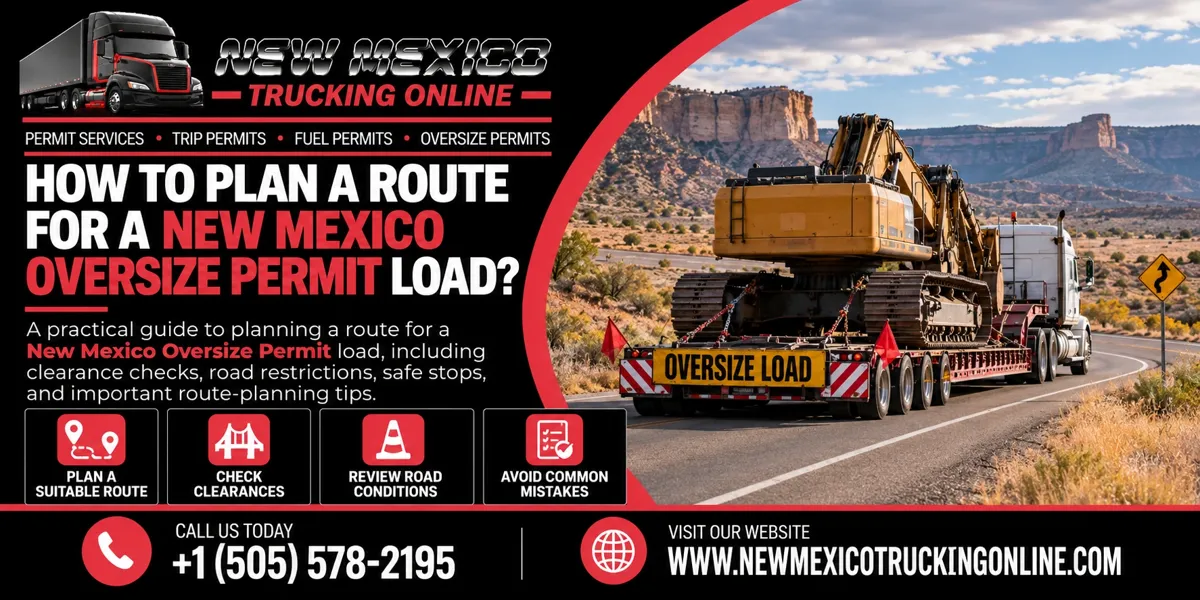
How To Plan A Route For A New Mexico Oversize Load
Table Of Contents
-
Introduction
-
Start With The Load And Vehicle
-
Review The New Mexico Oversize Permit
-
Plan The Route Around The Load
-
Check Clearance And Road Restrictions
-
Review Road Conditions And Construction
-
Plan Safe Stops
-
Prepare For Route Changes
-
Complete A Final Route Check
-
Common Mistakes To Avoid
-
Why Many Trucking Companies Choose Our Service
-
FAQ
Introduction
Planning the route is one of the most important parts of preparing an oversize movement in New Mexico. A road that works for an ordinary commercial vehicle may not be suitable for a large or heavy load.
Before departure, compare the final vehicle and load with the requirements of the New Mexico Oversize Permit. Route planning should account for the truck's dimensions, weight, route conditions, and restrictions that may affect the movement.
A careful review before the trip can help identify problems before they become delays on the road.
Start With The Load And Vehicle
Begin with the final loaded configuration, not an estimate prepared before loading.
Confirm the overall height, width, length, weight, and axle configuration. These details can affect which roads, bridges, turns, and other parts of the route are practical.
Also confirm the tractor and trailer combination. If the trailer changes or the load is positioned differently, the total dimensions may change.
Make sure dispatch, the driver, and the permit information all reflect the same vehicle and load.
Review The New Mexico Oversize Permit
Review the issued New Mexico Oversize Permit and all information associated with the movement.
Check the permitted route, travel dates, origin, destination, vehicle information, and any special conditions or instructions.
Dispatch should compare the planned route with the permit rather than relying only on general navigation software.
If the permit information does not match the final loaded vehicle, resolve the discrepancy before departure.
Plan The Route Around The Load
Evaluate the practical route between the pickup and delivery locations.
Consider road width, turning space, grades, intersections, traffic levels, and areas where the truck may have limited room to maneuver.
The shortest route is not always the best route for an oversize vehicle. A slightly longer route may be easier to manage if it provides better clearances, safer turns, and more predictable road conditions.
Check Clearance And Road Restrictions
Clearance should receive special attention when planning an oversize movement.
Review potential height restrictions, bridge clearances, narrow sections, and locations where the load may have limited room.
Width and length also matter. Tight turns, restricted shoulders, or narrow lanes can create problems for a large vehicle.
Use the actual final dimensions of the loaded truck when reviewing these risks. Do not rely on measurements taken before loading.
Review Road Conditions And Construction
Road conditions can change after a route has been planned.
Construction may narrow lanes, alter traffic patterns, or temporarily restrict movement. Weather can also affect visibility, traction, and travel time.
Before departure, dispatch should review known road conditions and major disruptions along the route.
If a road becomes unavailable during the trip, the driver should contact dispatch before making a major route change.
Plan Safe Stops
A good route plan should include practical places to stop.
Identify suitable locations for fuel, required breaks, inspections, or unexpected delays. Consider whether each stop has enough space for the truck and load.
Planning stops in advance reduces the chance that the driver will need to make an unplanned maneuver into an unsuitable location.
The schedule should also include reasonable time for delays.
Prepare For Route Changes
Even a carefully planned route can be affected by crashes, closures, construction, severe weather, or other unexpected events.
Before departure, dispatch should establish a clear process for handling a route problem. Drivers should know who to contact if the planned route becomes unavailable.
A replacement route should not be selected only because a navigation app suggests it. The carrier should review whether the alternative is suitable for the actual vehicle and whether the change affects the permitted movement.
Complete A Final Route Check
Before the truck leaves, conduct one final review.
Confirm the final dimensions and weight, vehicle information, origin, destination, route, travel date, and New Mexico Oversize Permit documentation.
A simple final checklist can include:
-
Final loaded dimensions
-
Total weight
-
Tractor and trailer information
-
Authorized route
-
Clearance concerns
-
Road restrictions
-
Planned stops
-
Permit documents
Common Mistakes To Avoid
Choosing The Shortest Route Automatically: Distance alone does not determine whether a route is practical for an oversize vehicle.
Using Old Load Measurements: Plan with the final loaded dimensions and weight.
Relying Only On GPS: Navigation software does not replace permit review and route planning.
Ignoring Clearance Risks: Check height, width, length, and maneuvering concerns before departure.
Failing To Monitor Construction: Road conditions can change after the route is planned.
Making A Major Route Change Without Review: Contact dispatch and review the alternative before continuing.
Why Many Trucking Companies Choose Our Service
Many trucking companies choose New Mexico Trucking Online because planning an oversize movement requires coordination between the load, equipment, route, and permit information.
Our service provides online permit processing and experienced permit support to help carriers manage New Mexico trucking requirements more conveniently. This can save time, simplify applications, reduce paperwork problems, and provide practical assistance when trip details need review.
When planning a route for a New Mexico Oversize Permit, having permit specialists available can help carriers organize the information needed for the movement and prepare the trip before the truck reaches the road.
FAQ
Why Is Route Planning Important For A New Mexico Oversize Load?
An oversize vehicle may have clearance, maneuvering, weight, or road restrictions that do not apply to ordinary traffic. Route planning helps identify potential problems before departure.
What Should I Confirm Before Planning The Route?
Confirm the final vehicle configuration, load dimensions, weight, origin, destination, travel date, and permit information.
Can I Use GPS To Plan an Oversized Route?
GPS can assist with navigation, but it should not replace reviewing the permitted route and whether the roads are suitable for the actual vehicle and load.
Should I Prepare For Route Changes?
Yes. Construction, closures, weather, and traffic incidents can affect the planned route. Dispatch and the driver should have a clear process for handling significant changes.
What If The Planned Route Becomes Unavailable?
Notify dispatch and review the alternative before continuing. Do not assume that a navigation app's suggested detour automatically works for the permitted movement.
For more information, visit the New Mexico Department of Transportation.