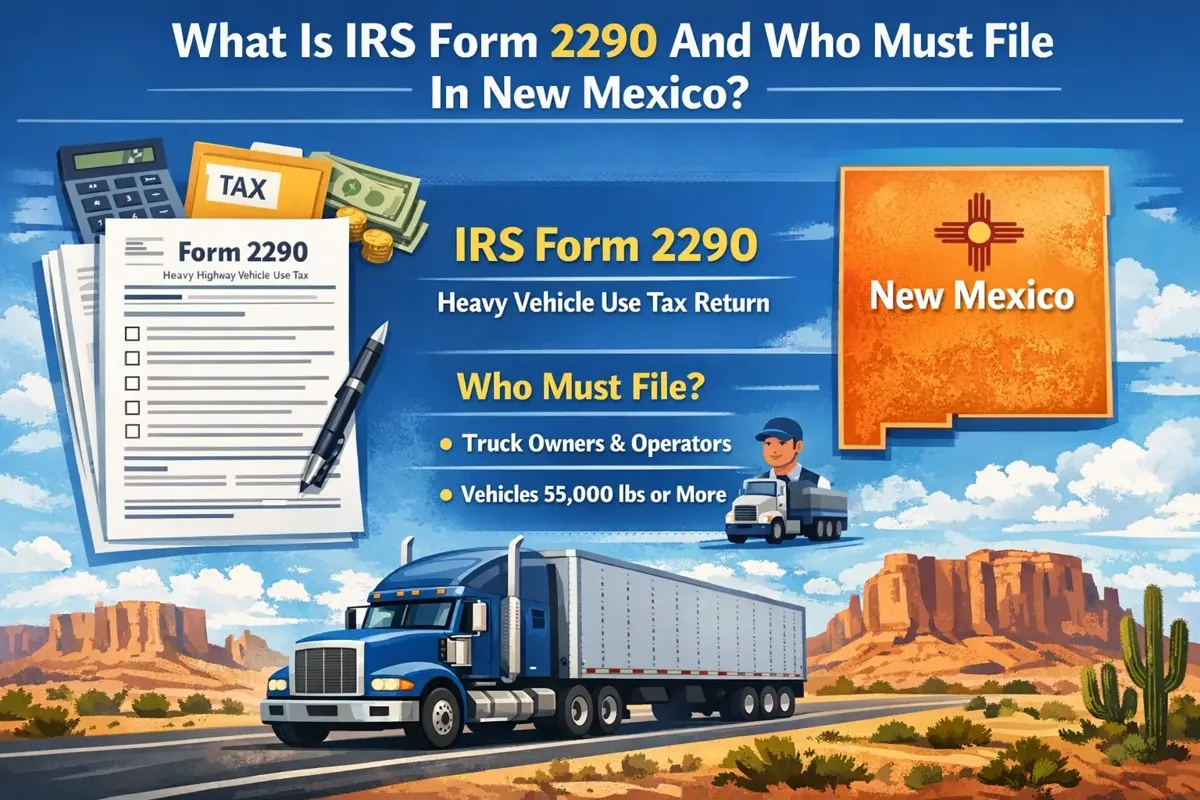
What Is IRS Form 2290?
IRS Form 2290 is a federal tax form required for heavy highway motor vehicles with a taxable gross weight of 55,000 pounds or more.
The tax collected through Form 2290 helps fund highway construction and infrastructure maintenance across the United States.
After filing and paying the tax, the IRS issues a stamped Schedule 1, which serves as proof of payment. This document is required for:
-
Vehicle registration
-
Tag renewals
-
Title transfers
-
IRP registration
Who Must File IRS Form 2290 In New Mexico?
You must file IRS Form 2290 if you:
1. Own A Heavy Highway Vehicle
-
The vehicle weighs 55,000 pounds or more
-
It is registered in your name
-
It operates on public highways
2. Are An Owner-Operator
Independent truck drivers operating under their own USDOT authority must file annually.
3. Operate A Trucking Company Or Fleet
Businesses operating multiple heavy vehicles must file Form 2290 for each qualifying vehicle.
4. Use A Vehicle In Interstate Or Intrastate Commerce
Even if you operate only within New Mexico, you are still required to file if the vehicle meets the weight threshold and uses public highways.
Do Agricultural Vehicles Need To File?
Yes, but they may qualify for suspended tax status if they are driven:
-
5,000 miles or less during the tax year
-
7,500 miles or less for agricultural vehicles
Even when tax is suspended, Form 2290 must still be filed to report the vehicle.
Who Is Exempt From Filing?
You may not need to file if:
-
The vehicle weighs under 55,000 pounds
-
The vehicle is not used on public highways
-
The vehicle is owned by a federal, state, or local government entity
However, most commercial heavy truck owners in New Mexico must file annually.
New Mexico Registration Requirements
The New Mexico Motor Vehicle Division (MVD) requires proof of HVUT payment before registering or renewing registration for heavy vehicles.
Without a stamped Schedule 1:
-
You cannot renew plates
-
You cannot complete IRP registration
-
Your registration may be delayed
IRS Form 2290 Filing Deadline
The Form 2290 tax year runs from July 1 through June 30.
Standard Deadline:
-
August 31 for vehicles first used in July
If you place a vehicle into service during a different month, you must file by the last day of the month following the month of first use.
Example:
-
First used in November → File by December 31
How Much Is The Heavy Vehicle Use Tax?
The HVUT amount depends on the vehicle’s taxable gross weight.
-
Minimum taxable weight: 55,000 pounds
-
Maximum annual tax: $850 per vehicle (75,000 pounds or more)
How To File IRS Form 2290 In New Mexico
You can file:
-
Electronically (E-file) – Fastest and recommended
-
By mail – Slower processing
-
By phone (505) 578-2195
E-filing allows you to receive your stamped Schedule 1 quickly, often within minutes after payment confirmation.
To file, you will need:
-
Employer Identification Number (EIN)
-
Vehicle Identification Number (VIN)
-
Taxable gross weight
-
First-use month
Penalties For Late Filing
Failure to file or pay on time may result in:
-
4.5% penalty of total tax due (monthly, up to 5 months)
-
Interest charges
-
Registration delays
Staying compliant helps avoid costly disruptions to your trucking operations.
Key Takeaways
-
IRS Form 2290 applies to heavy vehicles 55,000 lbs or more
-
Filing is required annually
-
Deadline is typically August 31
-
A stamped Schedule 1 is required for New Mexico registration
-
Maximum annual tax is $850 per vehicle
Final Thoughts
If you operate a heavy truck in New Mexico, filing IRS Form 2290 is a federal requirement enforced by the Internal Revenue Service. Ensuring timely filing and payment keeps your vehicle legally registered and on the road.
Whether you're an owner-operator or manage a fleet, understanding your HVUT obligations is essential for staying compliant and avoiding penalties.