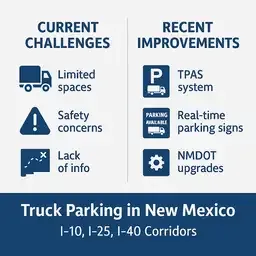
Recent Improvements: TPAS & I-10 System
-
New Mexico has launched its first Truck Parking Availability System (TPAS) — a ~$2.7 million project.
-
The TPAS covers Interstate 10 (I-10) over the ~164-mile stretch in New Mexico, including six rest areas: Lordsburg Welcome Centers (east & westbound), Anthony and Gage (westbound), and Yucca and Las Cruces (eastbound).
-
It uses electronic road signs + the state’s 511 travel information system to show real-time parking availability. And there are plans to integrate this info into trucking apps.
Current Conditions & Driver Experience
-
According to a survey (I-10 Corridor Coalition), many drivers report lack of safe/truck-suitable parking along I-10:
Location Type % Who Say Parking is Never or Rarely Available Public Rest Areas ~ 40% Private Truck Stops ~ 29% -
Problems reported include drivers spending 30+ minutes searching for safe parking.
-
When rest areas are full or unavailable, drivers often park in risky or unauthorized places (shoulders, ramps, etc.).
Rest Areas & Parking Facilities
-
Many rest areas along I-10 have facilities such as truck & passenger vehicle parking, restrooms, picnic tables, water, etc. For example, Gage (Mile Marker 61 on I-10), Acomita rest area (MM 102 on I-40).
-
Private truck stops are more plentiful in urban areas (e.g. near Albuquerque, along major highways), offering services like fuel, food, truck-friendly parking.
Major Gaps & Challenges
-
Insufficient Public Rest Area Parking: The number of spaces in public rest areas does not meet demand, especially along major freight corridors like I-10.
-
Information Availability Before TPAS: Drivers lacked real-time info about whether rest area parking was available, leading to wasted driving time and fatigue. TPAS is helping, but adoption and coverage are still increasing.
-
Private Parking Cost / Security: Many truckers prefer private stops for services and security, but costs vary, availability can be limited in rural stretches.
-
Overnight/Long-Break Parking: Some rest stops do not comfortably support long overnight breaks (limited lighting, security, facilities) especially in remote or rural areas. Anecdotal reports suggest variability in safety and amenities.
Helpful Features & What to Check
-
Real-time signs and state 511 system updates. These can save time and help with planning.
-
Amenities: restrooms, water, shade, lighting, security — especially for overnight parking.
-
Proximity to fuel, food, and repair services. Sometimes stopping in the middle of nowhere means limited access.
-
Private lots & apps: Platforms like TruckParkingClub, Flame Truck Parking, etc., offer places to reserve or locate paid parking.
Tips / What Truckers Can Do
-
Plan ahead using TPAS and rest area info to anticipate where parking will be available, especially along I-10.
-
Use mobile apps and platforms that show rest stops + private parking status.
-
During high demand times (late night, weekends), aim to stop earlier to avoid filling up rest areas.
-
Be ready with backup options (private truck stops, safe laybys) in case public rest areas are full.
-
Share feedback with NMDOT about rest area conditions, lighting, security — this helps prioritize improvements.
Outlook / What’s Next
-
TPAS is being expanded and refined; when fully implemented in 2025, it will cover all public rest areas along I-10 in NM with real-time info for 550+ parking spots across states in the I-10 corridor.
-
There’s potential to expand similar systems along other interstate routes in New Mexico (like I-25, I-40) to address parking shortages.
-
Public and private partnerships to increase parking supply: more private truck parking/gated lots, expanding existing rest areas, or designating secure lots near highway exits.