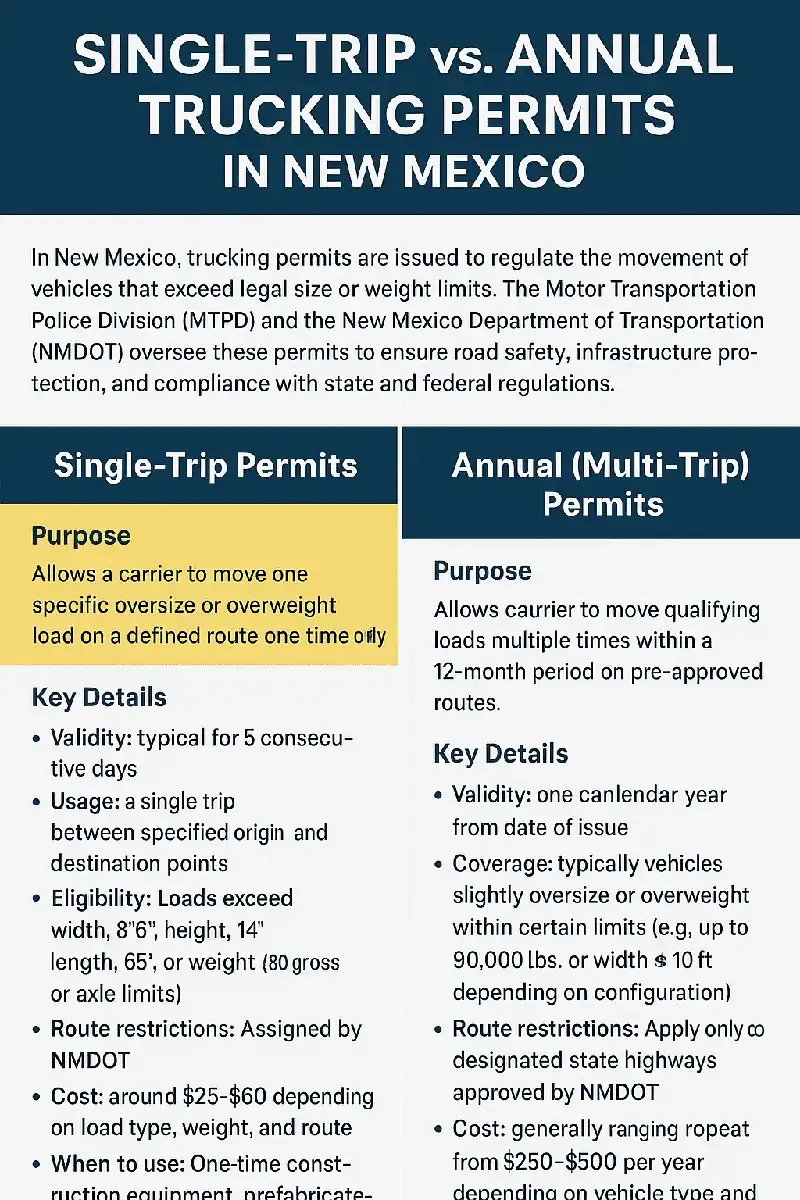
Two of the most common types are:
-
Single-Trip Permits
-
Annual (Multi-Trip) Permits
2. Single-Trip Permits
Purpose:
A Single-Trip Permit allows a carrier to move one specific oversize or overweight load on a defined route one time only.
Key Details:
-
Validity: Typically valid for five consecutive days (unless otherwise stated).
-
Usage: Covers a single trip between specified origin and destination points.
-
Eligibility: Required when a load exceeds:
-
Width: 8’6”
-
Height: 14’
-
Length: 65’ (for combination vehicles)
-
Weight: 80,000 lbs gross (or axle limits)
-
-
Route Restrictions: The NMDOT may assign a specific route to ensure bridges, roads, and structures can handle the load.
-
Cost: Around $100–$300 depending on the load type, weight, and route (fees can vary).
-
When to Use:
-
Moving one-time construction equipment, prefabricated homes, or heavy machinery.
-
Testing or temporary deliveries.
-
Advantages:
-
Fast approval for one-off hauls.
-
Lower upfront cost for occasional movements.
Disadvantages:
-
Must reapply for each trip.
-
Not practical for frequent or recurring loads.
3. Annual (Multi-Trip) Permits
Purpose:
An Annual Permit (also called a blanket or multi-trip permit) allows carriers to move qualifying loads multiple times within a 12-month period on pre-approved routes.
Key Details:
-
Validity: One calendar year from the date of issue.
-
Coverage: Typically for vehicles that are:
-
Slightly oversize or overweight but within certain limits (e.g., up to 90,000 lbs, or width ≤ 10 ft depending on configuration).
-
-
Route Restrictions: Applies only to designated state highways approved by NMDOT.
-
Cost: Generally ranges from $550–$1000 per year, depending on vehicle type and weight class.
-
When to Use:
-
For companies hauling similar loads frequently (e.g., utility poles, equipment, building materials).
-
For repeat trips along the same corridors.
-
Advantages:
-
Saves time—no need for repeated applications.
-
Cost-effective for frequent transport operations.
-
Simplifies compliance tracking.
Disadvantages:
-
Not valid for all routes or extreme oversize/overweight loads.
-
Must stay within specific weight/size thresholds to remain covered.
4. Key Differences at a Glance
| Feature | Single-Trip Permit | Annual Permit |
|---|---|---|
| Validity Period | 5 days (typical) | 12 months |
| Trips Covered | One route, one trip | Multiple trips on approved routes |
| Best For | Occasional or unique hauls | Regular/repetitive hauls |
| Cost | Lower (per trip) | Higher upfront, lower overall |
| Route Control | Strictly designated route | Pre-approved route network |
| Approval Speed | Faster for one-time use | Longer initial setup but easier renewals |
5. Where and How to Apply
-
Online: www.newmexicotruckingonline.com
-
By Phone: (505) 578-2195
-
Required Info:
-
Vehicle registration and insurance details
-
Load dimensions and weight
-
Axle configuration
-
Proposed travel route
-
Contact information for carrier and driver
-
6. Compliance Tips
-
Always carry your permit copy in the vehicle.
-
Follow escort and signage requirements (as indicated on your permit).
-
Check route restrictions daily — construction or weather can change permitted paths.
-
Renewal reminders: Apply at least two weeks before annual permit expiration.