1. Understanding Permitted Routes
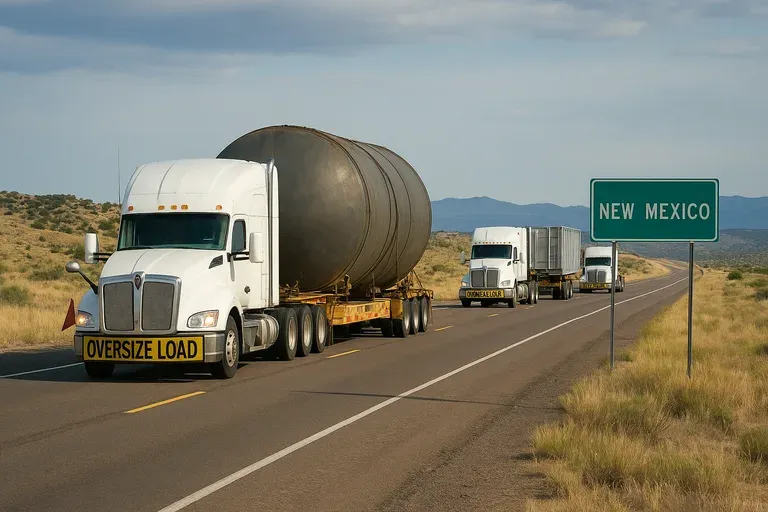
Oversize and overweight loads in New Mexico are limited to specific state-approved routes. These permitted routes are designed to accommodate larger vehicles while avoiding low bridges, narrow lanes, and weight-restricted infrastructure.
Key Route Categories:
-
Interstate Highways – Most oversize loads are directed along major corridors such as I-10, I-25, and I-40, which are built to handle heavier and wider loads.
-
State Highways – Selected state roads are included in NMDOT’s approved network for permitted vehicles, depending on load dimensions and destination.
-
Local Roads – Use of county or municipal roads often requires additional approval from local authorities, especially for final-mile delivery or construction access.
Route Surveys:
For particularly large or unusual loads (such as wind turbine components or construction cranes), a route survey may be required. This involves verifying bridge clearances, turn radii, and overhead obstructions before the permit is issued.
2. Travel Time Restrictions
Oversize vehicles in New Mexico can only travel during specific hours to minimize interference with regular traffic and enhance roadway safety.
General Time Rules:
-
Daylight Travel Only: Oversize movements (wider than 8’6”) are generally restricted to ½ hour before sunrise to ½ hour after sunset, excluding holidays.
-
Night Travel: Only permitted for loads under certain width and escort conditions, typically requiring additional lighting and flagging.
-
No Travel During Adverse Weather: Travel is prohibited during snow, fog, or other hazardous weather conditions that reduce visibility.
Weekend and Holiday Restrictions:
-
Travel is typically not allowed on major holidays such as New Year’s Day, Memorial Day, Independence Day, Labor Day, Thanksgiving, and Christmas.
-
Weekend travel (especially Sundays) may be limited for large or escorted loads to avoid traffic congestion.
3. Escort and Safety Requirements
Depending on the size and weight of the load, NMDOT may require pilot or escort vehicles to accompany the truck:
-
Front and rear escorts are required for loads exceeding certain width thresholds (commonly over 12 feet).
-
Escorts must be equipped with communication radios, high-visibility signage, and amber warning lights.
4. Route Deviations and Compliance
Drivers must strictly follow the permitted route listed on the issued permit. Deviating from the approved path without authorization is considered a violation and can result in:
-
Permit revocation
-
Significant fines
-
Delays or reissuance requirements
If construction or road closures require a route change, the driver must contact NMDOT Permitting for an updated authorization before proceeding.
5. Planning Tips for Truckers
-
Check Current Restrictions: Always review NMDOT’s Oversize/Overweight Travel Information Portal before departure.
-
Plan for Rest Stops: Ensure stops are within allowed zones and can accommodate the vehicle’s dimensions.
-
Use GPS Mapping Approved by NMDOT: Avoid consumer GPS apps that may route through restricted areas.
-
Carry Permit Documentation: The driver must have a copy (digital or paper) of the valid permit at all times.
Conclusion
Navigating oversize and overweight loads in New Mexico requires careful planning, adherence to designated routes, and compliance with travel time limits. By following NMDOT regulations, trucking companies can ensure safer and smoother operations across the state’s road network.