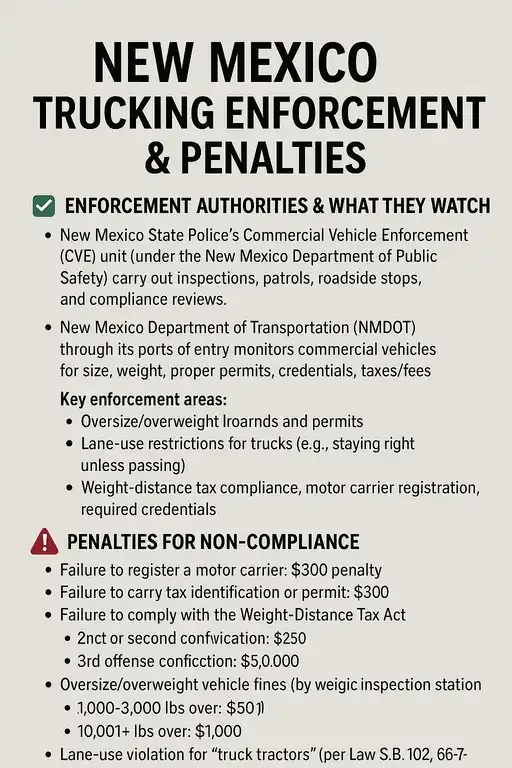
Enforcement Authorities & What They Watch
-
The New Mexico State Police’s Commercial Vehicle Enforcement (CVE) unit (under the New Mexico Department of Public Safety) is the lead enforcement agency for CMVs in New Mexico. They carry out inspections, patrols, roadside stops, and compliance reviews.
-
The New Mexico Department of Transportation (NMDOT) via its ports of entry monitors commercial vehicles for size, weight, proper permits, credentials, taxes/fees.
-
Key enforcement areas include:
-
Oversize / overweight loads and permits
-
Lane-use restrictions for trucks (e.g., staying right unless passing)
-
Weight‐distance tax compliance, motor carrier registration, required credentials
-
Penalties for Non-Compliance
Here are some of the penalty assessments in New Mexico that apply to trucking / commercial vehicle operations:
-
Failure to register a motor carrier: $600 penalty.
-
Failure to carry tax identification or permit: $600.
-
Failure to comply with the Weight-Distance Tax Act
-
1st conviction: $600
-
2nd within ten years: $600
-
3rd or subsequent within ten years: $1,500
-
-
Failure to stop at a designated port of entry or inspection station:
-
2nd conviction: $350
-
3rd or subsequent: $700
-
-
Oversize/overweight vehicle fines (by weight over limit): e.g.,
-
1,000-3,000 lbs over: $100
-
10,001+ lbs over: $2,000
-
-
Lane-use violation for “truck tractors” (per Law S.B. 102, 66-7-376 NMSA 1978):
-
First or second offense: $350
-
Third offense: $600
-
Practical Implications for Carriers & Drivers
-
Ensure all permits are valid and accessible: oversize/overweight permits, trip permits, weight-distance tax filings.
-
Be aware of lane-use rules: especially the 2023 law requiring truck-tractors to not drive in the left lane unless passing.
-
Monitor repeated violations: Carries heavier penalties for repeat offences (e.g., 3rd+ time).
-
Use the ports of entry correctly: stopping and presenting required documents helps avoid fines.
-
Keep accurate records: e.g., for tax, weight, load limits, vehicle credentials — deficiencies can trigger inspections and fines.