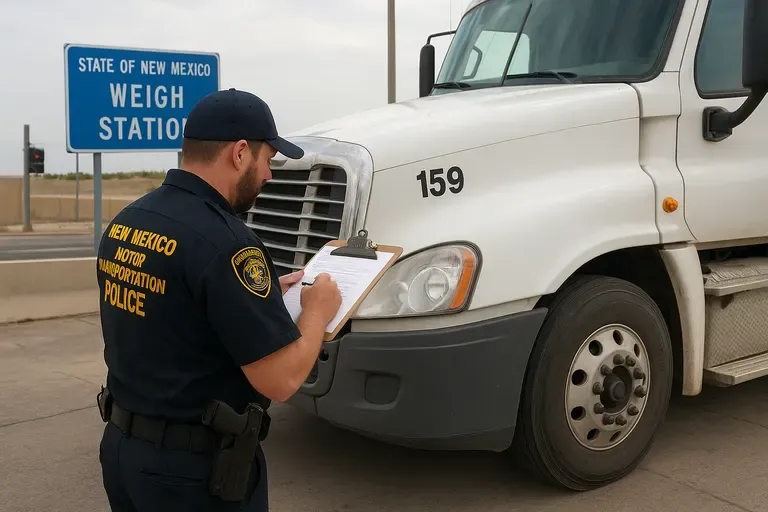
Types of DOT Inspections
New Mexico follows the Federal Motor Carrier Safety Administration (FMCSA) inspection levels. The most common ones you’ll encounter include:
-
Level I – Full Inspection:
The most thorough type, covering both driver credentials and vehicle components. Inspectors will check your:-
CDL and medical certificate
-
Hours of Service (HOS) logs and ELD compliance
-
Driver vehicle inspection report (DVIR)
-
Brake system, tires, lights, suspension, coupling devices, and more
-
-
Level II – Walk-Around Inspection:
Similar to Level I, but without checking components that require the inspector to get under the vehicle. -
Level III – Driver-Only Inspection:
Focuses on documentation such as your CDL, medical card, HOS, and trip logs. -
Level V & VI – Vehicle or Hazmat-Specific Inspections:
These are specialized checks for specific carriers or loads.
Where Inspections Take Place
DOT inspections in New Mexico are usually conducted at:
-
Permanent inspection stations along major highways (I-10, I-25, I-40)
-
Mobile enforcement units that can set up temporary checkpoints
-
Roadside stops initiated by state troopers or MTP officers
What Officers Check
Inspectors typically review:
-
Vehicle registration and permits (IRP, IFTA, WDT)
-
Load securement and weight compliance
-
ELD and HOS data for accuracy
-
Vehicle safety condition — brakes, tires, lights, leaks, etc.
-
Driver fitness — medical card, sobriety, and fatigue signs
Tips to Pass Inspections Smoothly
-
Perform a thorough pre-trip inspection before every run.
-
Keep your ELD and paperwork organized and easily accessible.
-
Ensure lights, brakes, and tires are in good condition.
-
Be respectful and cooperative — professionalism goes a long way.
-
Stay updated on New Mexico’s weight distance tax and local permit rules.
Consequences of Failing an Inspection
Violations found during inspections can lead to:
-
Out-of-service orders (vehicle or driver)
-
Fines or penalties under New Mexico MTP rules
-
Points on your CSA (Compliance, Safety, Accountability) score
-
Potential delays to your delivery schedule
Final Thoughts
DOT inspections aren’t meant to hassle drivers—they’re designed to keep highways safe. By staying compliant and maintaining your equipment, you can pass inspections without issues and keep your operation running smoothly across New Mexico highways.