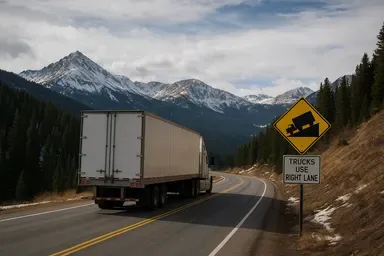
1. Know the Major Mountain Passes
Truck drivers crossing New Mexico often face routes with elevations above 7,000 feet. Some of the most important include:
-
Raton Pass (I-25) – Northern NM, steep grades, frequent snow in winter.
-
Glorieta Pass (I-25 near Santa Fe) – Sharp turns and narrow lanes.
-
Emory Pass (NM-152) – High elevation and tight switchbacks (not ideal for heavy trucks).
-
Apache Summit (US-70 east of Alamogordo) – Sudden weather changes and strong winds.
Always check elevation maps and truck restrictions before departure — some scenic routes are not suitable for commercial vehicles.
2. Inspect Your Vehicle Before Climbing
Before entering mountainous terrain, conduct a thorough pre-trip inspection focusing on:
-
Brakes – Ensure air brakes are properly adjusted and fully charged.
-
Cooling System – Engine overheating is common at altitude due to reduced airflow.
-
Transmission and fluids – Check oil and coolant levels.
-
Tires – Confirm correct pressure and tread depth for traction and heat management.
At high altitude, engines may lose up to 3% of power for every 1,000 feet of elevation, so mechanical readiness is critical.
3. Use Proper Gear and Speed Control
When climbing or descending steep grades:
-
Use low gears early — don’t wait until your brakes start to heat up.
-
Avoid riding the brakes; instead, apply steady, light pressure when needed.
-
Downshift before descending, not during.
-
Follow posted truck speed limits, which are often lower than general traffic speeds.
New Mexico DOT provides “Runaway Truck Ramp” zones — familiarize yourself with their locations along routes like Raton Pass.
4. Prepare for Sudden Weather Changes
Mountain weather can shift rapidly — especially between fall and spring.
Expect:
-
Snow and ice at higher elevations (even when lower routes are clear).
-
Fog and low visibility near summit points.
-
High winds in open mountain passes.
Carry chains and traction devices during winter months, and monitor NMDOT 511 for real-time road and weather updates.
5. Watch for Altitude-Related Effects
High altitude doesn’t only affect your truck — it affects you too.
-
Drink plenty of water to prevent dehydration.
-
Avoid fatigue by taking scheduled breaks.
-
Be aware of lightheadedness or headaches — signs of mild altitude sickness.
Proper rest and hydration help maintain focus, especially on long downhill stretches requiring sustained braking control.
6. Respect Local Regulations and Signage
New Mexico enforces strict weight, speed, and lane restrictions on mountain grades.
-
Always obey truck lane signage.
-
Stop before downgrade checkpoints where required.
-
Use CB radio or company dispatch to share information about closures or hazards.
✅ Key Takeaway
Driving through New Mexico’s mountain passes demands skill, patience, and preparation.
By maintaining your truck, using the right gears, watching weather reports, and respecting local laws, you’ll ensure a safe and efficient trip through some of the Southwest’s most challenging — and beautiful — roads.