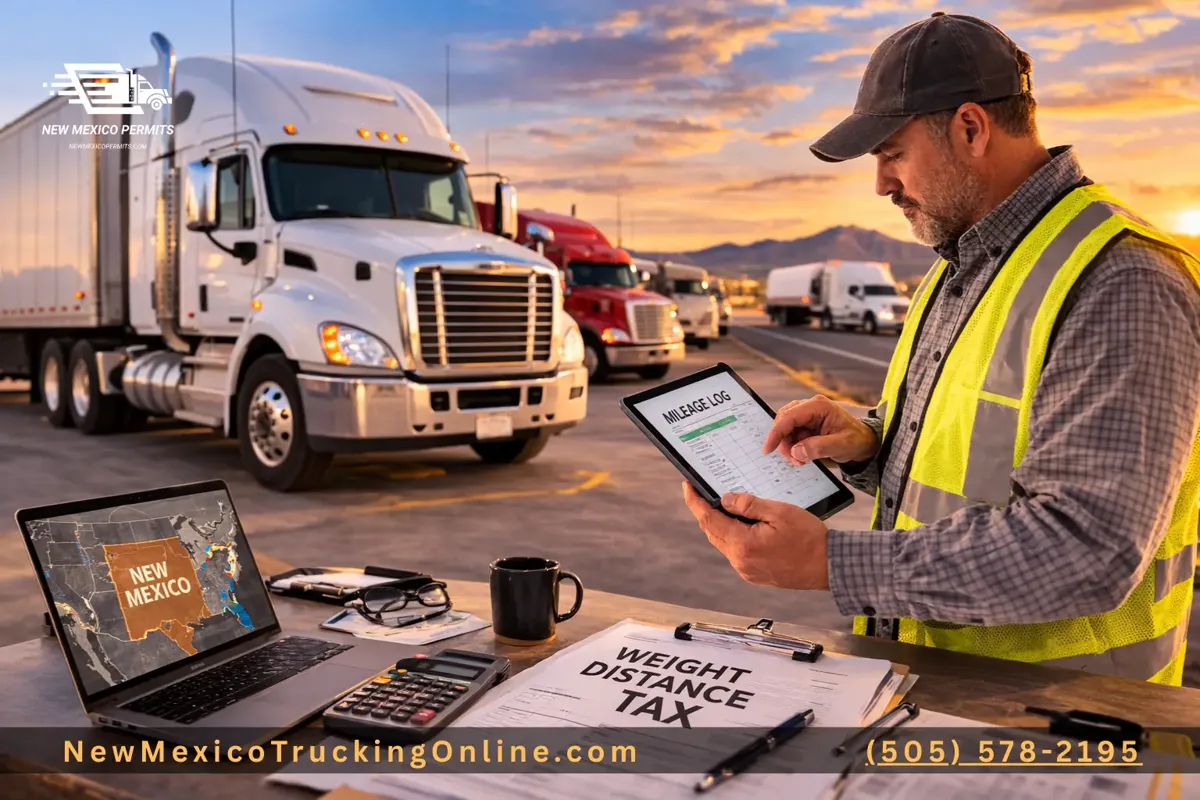
How to Handle Weight Distance Tax When Leasing Trucks or Drivers
Leasing trucks or drivers lets trucking companies expand capacity without buying equipment. But in New Mexico, fleets must still comply with the Weight Distance Tax (WDT). Knowing how the tax affects leased equipment or drivers is vital to staying compliant and avoiding penalties.
Understanding the New Mexico Weight Distance Tax
The New Mexico Weight Distance Tax applies to commercial vehicles over 26,000 pounds on public highways. The tax depends on:
- The gross vehicle weight
- The number of miles traveled in New Mexico.
Carriers must report these miles and pay the tax quarterly. Leased vehicles still require the correct party to report and pay.
After reviewing how the tax works, let’s clarify who is responsible for paying it when trucks are leased.
Responsibility for the tax depends on the authority under which the vehicle operates.
In most leasing arrangements:
- The carrier operating under its own authority is responsible for WDT reporting and payment.
- If the truck is leased to a carrier, the carrier usually files the tax.
- The registered owner may still be responsible if the vehicle operates under their motor carrier authority.
Because leasing agreements differ, clearly define tax responsibility in the contract. Lack of clarity can lead to missed filings or duplicate reports.
Handling Weight Distance Tax When Leasing Drivers
When drivers are leased rather than the trucks, the tax obligation typically remains with the motor carrier whose authority is being used for the trip. The carrier must:
- Track miles traveled within New Mexico.
- Maintain accurate trip records.
- Include those miles in quarterly WDT reports.
Dispatchers and fleet managers must ensure leased drivers track miles as company drivers do.
Recordkeeping Best Practices for Leased Operations
To stay compliant with New Mexico WDT requirements, carriers should maintain the following:
- Detailed trip reports
- Accurate New Mexico mileage records
- Copies of lease agreements
- Documentation of vehicle weight classifications
Good recordkeeping helps protect fleets during audits and ensures accurate quarterly filings.
Why Many Trucking Companies Use Our Service
The New Mexico Weight Distance Tax is complicated when fleets have many trucks, leased equipment, or drivers.
Many companies use Weight Distance Tax services to manage deadlines, file accurately, and ensure compliance, reducing fleet managers' workload and avoiding penalties.
For fleets that frequently operate in New Mexico, outsourcing WDT reporting can save time and simplify compliance.
By understanding leasing’s tax implications and keeping accurate records, companies can confidently manage their taxes while growing operations.