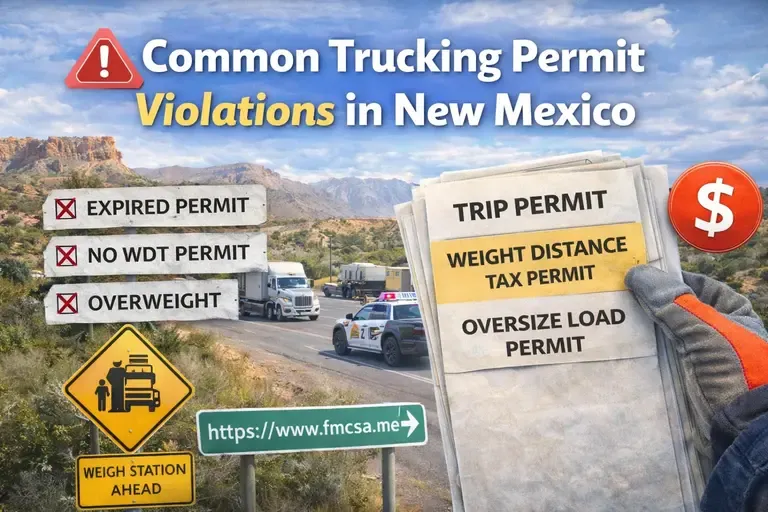
1. Operating Without a New Mexico Weight Distance Tax Permit
This is the most frequent violation.
New Mexico requires most commercial vehicles over 26,000 lbs GVW to:
-
Register for the Weight Distance Tax, or
-
Purchase a temporary trip permit
Many carriers mistakenly assume IFTA covers New Mexico mileage—it does not.
2. Incorrect or Missing Trip Permits
Violations often occur when:
-
A trip permit is expired
-
The permit does not match the vehicle information
-
The permit was never issued but assumed to be active
Trip permits are typically time-limited, so timing matters.
3. Inaccurate Mileage Reporting
New Mexico closely audits mileage.
Common mistakes include:
-
Underreporting miles traveled
-
Estimating instead of logging actual distance
-
Inconsistent trip logs vs fuel receipts
These errors often trigger audits, penalties, and back taxes.
4. Exceeding Legal Weight Limits Without Proper Permits
Violations happen when:
-
Axle weights exceed limits
-
Gross weight exceeds legal thresholds
-
Loads shift during transit
Even being slightly overweight can result in fines.
5. Operating Oversize Loads Without Proper Authorization
You must have an oversize/overweight permit if your load exceeds:
-
Legal width
-
Height
-
Length
-
Weight
Violations often include:
-
Wrong travel route
-
Traveling outside permitted hours
-
Missing escort vehicles
6. Failure to Carry Permit Documentation
During roadside inspections, officers expect:
-
Weight Distance Tax permit or account proof
-
Trip permits
-
Oversize/overweight permits (if applicable)
Not having documents accessible can result in citations or delays, even if permits were purchased.
7. Using the Wrong Permit Type
Examples:
-
Using a fuel permit instead of a WDT permit
-
Operating under IRP when New Mexico is not listed
-
Using a permit intended for a different vehicle
Each permit serves a specific purpose—mix-ups are common.
8. Permit Expiration During Transit
Some permits expire:
-
After a set number of days
-
At midnight on the expiration date
If your permit expires while you're still in New Mexico, you may be fined—even if the trip started legally.
9. Skipping Weigh Stations or Ignoring Officer Instructions
Violations include:
-
Bypassing open weigh stations
-
Failing to pull in when directed
-
Ignoring mobile enforcement units
These violations can lead to:
-
Immediate citations
-
Secondary inspections
-
Increased scrutiny in future trips
10. Driver Unfamiliarity With New Mexico Rules
Many violations occur because:
-
Drivers assume rules are the same as other states
-
Dispatch failed to communicate permit requirements
-
Training didn’t include New Mexico–specific compliance
Education and communication are key to prevention.
Consequences of Permit Violations in New Mexico
Violations may result in:
-
Monetary fines
-
Back taxes plus interest
-
Out-of-service orders
-
Compliance audits
-
Increased insurance risk
Repeated violations can seriously damage your carrier profile.
How to Avoid These Violations
Verify permit requirements before entering New Mexico
Confirm Weight Distance Tax compliance at https://www.newmexicotruckingonline.com/
Weigh loads accurately
Track mileage precisely
Register your UCR at https://www.fmcsa.me/
Carry all permit documents
Monitor permit expiration dates
Train drivers on NM-specific rules
Final Takeaway
Most New Mexico trucking permit violations are preventable
The Weight Distance Tax is the #1 area of confusion
Proper planning and documentation protect your operation